
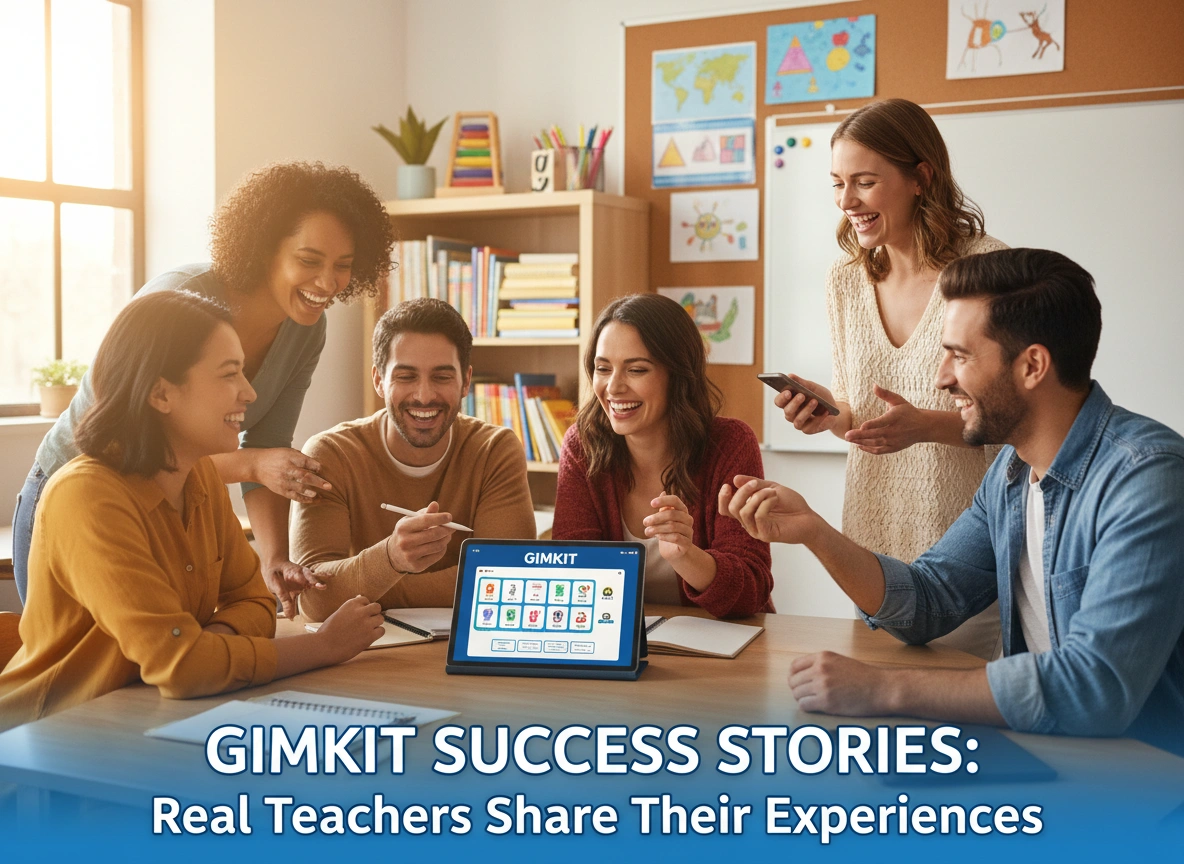
Imagine walking into a classroom where students are practically begging to answer more questions about stoichiometry or ancient civilizations. The energy is high, collaboration is happening naturally, and even the quietest student in the back is fist-pumping after a correct answer. This isn’t a scene from an educational utopia; it’s a typical Tuesday for educators who have integrated Gimkit into their teaching toolkit.
Finding tools that genuinely engage students without sacrificing rigorous learning is a constant battle for teachers. Many “gamified” platforms offer flash but lack substance, or they become repetitive quickly. Gimkit, created by a high school student who felt bored in class, has flipped that script. It’s a game show-style learning platform where students answer questions at their own pace to earn virtual currency, which they can then use to buy power-ups and upgrades.
This article dives into real experiences from educators who have witnessed the transformative power of Gimkit. We will explore how it revitalizes review sessions, empowers student autonomy, and adapts to diverse learning environments.
From Reluctance to Enthusiasm: Breaking the Engagement Barrier
One of the most common challenges teachers face is the “mid-semester slump.” Students know the routine, energy levels dip, and getting enthusiastic participation feels like pulling teeth.
Sarah, a middle school science teacher from Ohio, shared her experience with a particularly tough 8th-grade cohort. “They were good kids, but completely checked out during review days,” she explains. “We tried traditional Jeopardy games and Kahoot, but the same three kids won every time, and the rest just zoned out.”
When Sarah introduced Gimkit, the dynamic shifted immediately. Because Gimkit allows students to answer questions at their own pace rather than waiting for the whole class, students who processed information differently didn’t feel left behind.
“The game mode ‘The Floor is Lava’ was a game-changer,” Sarah recalls. “They had to work together to keep the team above the lava by answering questions correctly. Suddenly, my ‘too cool for school’ students were shouting strategy to my high achievers. They realized that accuracy mattered more than speed if they wanted to survive the game. We spent 40 minutes reviewing cell biology, and when the bell rang, they groaned. They actually groaned because they wanted to keep playing.”
This isn’t an isolated incident. The strategic element of the game—deciding when to save money and when to spend it on upgrades—adds a layer of depth that keeps students hooked long after the novelty of a standard quiz wears off.
Empowering Student Agency and Strategy
Unlike many platforms that test only recall, Gimkit introduces elements of resource management and strategy. This unique feature appeals to students who might not typically shine in traditional academic settings.
Mark, a high school history teacher in California, noticed this with a student we’ll call David. David struggled with test anxiety and rarely participated in class discussions. However, David was an avid gamer.
“When we played ‘Trust No One’—a mode similar to the popular game Among Us—David came alive,” Mark says. “He understood the mechanics instantly. He wasn’t just recalling dates of the Civil War; he was analyzing the game state, investigating who the ‘impostors’ were, and using his knowledge of history to clear his name.”
David’s success in the game built his confidence. He realized that he knew the material just as well as his peers; he just needed a different arena to show it. Mark notes that after a few weeks of using Gimkit for formative assessments, David’s hand started going up during regular lectures. The platform provided a low-stakes environment where failure wasn’t final—it was just part of the strategy to get better upgrades for the next round.
Versatility Across the Curriculum
A common misconception about gamified learning is that it only works for simple fact recall. However, success stories from teachers demonstrate Gimkit’s versatility across complex subjects and varying grade levels.
Language Arts and Vocabulary Acquisition
Jennifer, an ESL (English as a Second Language) instructor, uses Gimkit to bridge language gaps. “Vocabulary retention is the hardest part of learning a new language,” she notes. “Drilling flashcards is boring and ineffective for long-term memory.”
Jennifer utilizes the ‘KitCollab’ feature, where students help build the game by submitting their own questions. “It forces them to think about the material critically. They aren’t just answering; they are creating. When they see their own question pop up on the screen, their faces light up. It gives them ownership over their learning.”
Mathematics and Immediate Feedback
In math classes, immediate feedback is crucial. If a student practices a formula incorrectly for an hour, they cement a misunderstanding.
Tom, a 5th-grade math teacher, uses Gimkit for what he calls “high-frequency practice.” He explains, “In a standard worksheet, a student might do 20 problems in 30 minutes. In a 10-minute Gimkit session, they might answer 60 questions because of the repetition and speed. If they get it wrong, the correct answer is shown immediately, and they will likely see that question again soon. It corrects errors in real-time.”
Tom has seen test scores in multiplication proficiency rise by 15% since implementing weekly Gimkit sessions. The repetition doesn’t feel like drudgery because the context—earning money to buy icy themes or power-ups—makes it feel like play.
Building Community and Soft Skills
Beyond academic scores, teachers report that Gimkit significantly impacts classroom culture. The collaborative modes foster communication and teamwork, soft skills that are essential for future success.
“I have a very competitive class this year,” shares Lisa, a high school Spanish teacher. “At first, it was cutthroat. But then we played ‘Thanos Mode,’ where they had to collect all the Infinity Stones as a class. They realized quickly that if they didn’t share their in-game money and coordinate who was buying which upgrade, they would lose.”
Lisa watched as natural leaders emerged to organize resources. Students who usually competed against each other were suddenly high-fiving over a shared victory. “It brought the class together in a way I hadn’t managed to do all semester. It turned ‘me against you’ into ‘us against the game’.”
Teacher-Approved Tips for Gimkit Success
Based on these success stories, experienced educators offer the following advice for those looking to implement Gimkit:
- Start Simple: Don’t jump into complex modes like ‘Trust No One’ immediately. Start with ‘Classic’ mode to let students understand the mechanics of answering questions and buying upgrades.
- Use KitCollab: Let students generate the content. It saves you prep time and increases their investment in the game.
- Mix Up the Modes: The variety of game modes is Gimkit’s strength. Use ‘The Floor is Lava’ for cooperation, ‘Tag’ for energetic competition, and ‘Classic’ for individual focus.
- Debrief After the Game: Don’t just let the bell ring. Spend two minutes discussing the hardest questions. The students are already focused on the content, making it a prime teachable moment.
- Set Limits: While engaging, moderation is key. Using it as a special review tool or a Friday treat keeps the novelty alive and prevents burnout.
Conclusion: More Than Just a Game
The stories shared by Sarah, Mark, Jennifer, Tom, and Lisa illustrate that Gimkit is more than a digital distraction. It is a pedagogical tool that, when used effectively, addresses core educational challenges: engagement, differentiation, and retention.
By meeting students where they are—in a world that values interactivity, instant feedback, and agency—teachers are finding new ways to ignite a passion for learning. Whether it’s helping a quiet student find their voice, turning a boring vocab list into a thrilling survival mission, or uniting a divided classroom, the success of Gimkit lies in its ability to make hard work feel like serious fun.
As education continues to evolve, tools that bridge the gap between rigorous content and student engagement will remain essential. For these teachers, Gimkit has already earned its place at the head of the class.