
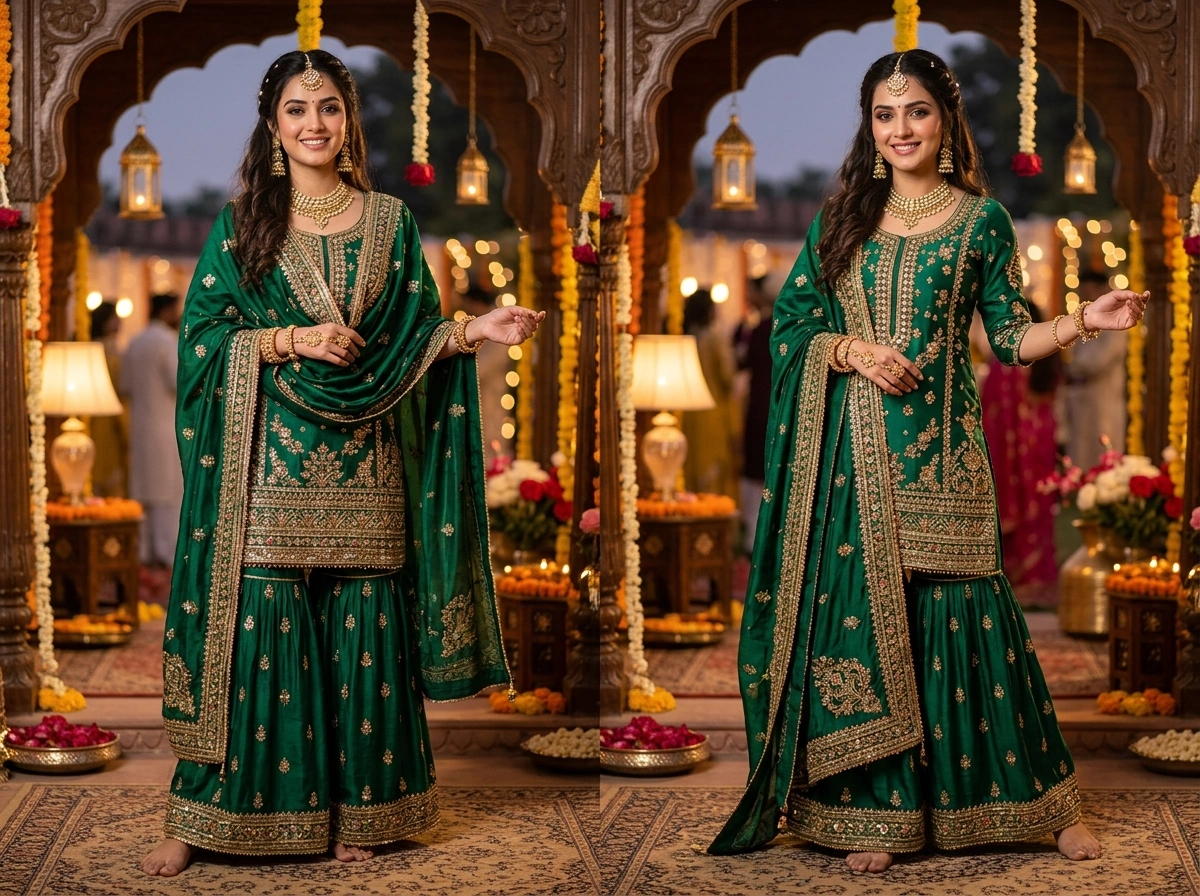
Few outfits capture the joy of celebration quite like a sharara. With its flowing, flared silhouette and rich detailing, this traditional ensemble has become a favorite for women across the United States who love ethnic fashion. Whether you’re attending a South Asian wedding in California, an Eid gathering in Texas, or a Diwali party in New Jersey, a sharara helps you stand out with grace and confidence.
This guide breaks down everything you need to know, from understanding the garment’s roots to styling it for your next big event. Let’s get into the details that turn a beautiful outfit into a showstopping look.
What Is a Sharara Dress?
A sharara is a traditional outfit made up of three main parts: a short or long top (kurti), a pair of wide-legged, flared pants, and a dupatta (a long scarf). The pants are the signature feature. They fit closely around the hips and thighs, then dramatically widen from the knee down, creating a graceful, skirt-like flow when you walk.
People often confuse the sharara with the gharara, but there’s a clear difference. A gharara flares from the knee with a gathered, ruched joint, while a sharara flows in a smooth, continuous flare from the waist or hip. Both look stunning, but the sharara offers a slightly more modern, fluid drape.
The beauty of this outfit lies in its versatility. You can find styles ranging from heavily embellished bridal pieces to lighter, breezy versions perfect for daytime festivities.
The Cultural Significance Behind the Sharara
The sharara traces its history back to the royal courts of the Mughal era and the city of Lucknow in India. Originally worn by nobility and the women of aristocratic families, it was a symbol of elegance and high status. Over the decades, it spread across South Asia and became a beloved choice for festive and ceremonial wear.
Today, the sharara carries that same sense of occasion. It connects modern wearers to a rich heritage while staying firmly in style. For the diverse communities across America who celebrate these traditions, wearing a sharara is both a fashion statement and a meaningful tie to cultural roots.
Why the Sharara Is Perfect for Festive Occasions
Celebrations call for outfits that feel special, and the sharara delivers on every front. Here’s why it works so well for festive events.
Weddings
At weddings, you want to look polished without overshadowing the bride. A sharara strikes that balance beautifully. Brides themselves often choose richly embroidered shararas in deep reds or golds, while guests can opt for softer pastels or jewel tones. The dramatic flare photographs wonderfully, making it ideal for the many photos a wedding brings.
Eid
Eid is a time for joy, family, and dressing your best. A sharara in flowing chiffon or georgette keeps you comfortable during long days of visiting relatives and sharing meals. Light embellishments and fresh colors capture the festive spirit without feeling too heavy.
Diwali
The festival of lights calls for outfits that shine. Shararas with sequin work, mirror detailing, or metallic embroidery catch the glow of diyas and fairy lights beautifully. Bold colors like emerald, fuchsia, and royal blue feel right at home during Diwali celebrations.
If you’re shopping for your next celebration, a well-made sharara dress can serve as a versatile staple you reach for again and again.
Styling Tips: Fabrics, Colors, and Embroidery
Getting the details right makes all the difference. Here’s how to choose elements that suit your event and personal style.
Fabric Choices
The fabric sets the tone for your entire look.
- Georgette and chiffon: Lightweight and flowy, these are perfect for warm climates and daytime events.
- Silk and raw silk: Rich and structured, ideal for formal evening functions and weddings.
- Velvet: A luxurious pick for winter celebrations, offering warmth and depth.
- Net: Often used for dupattas and overlays, adding a delicate, dreamy finish.
Color Palettes
Color choice depends on the occasion and the season.
- Bold jewel tones like ruby red, sapphire, and emerald work beautifully for evening events.
- Soft pastels such as blush pink, mint, and lavender suit daytime gatherings and spring celebrations.
- Metallics and neutrals like gold, champagne, and ivory feel elegant and pair easily with statement jewelry.
Embroidery Styles
Embroidery adds personality and richness. Popular options include zari (metallic thread work), gota patti (ribbon appliqué), mirror work, and intricate sequin detailing. For a refined look, choose one dominant embroidery style rather than mixing too many.
How to Accessorize Your Sharara
Accessories complete the look and let you express your personal taste.
Jewelry
Match your jewelry to the neckline and embroidery of your outfit. Statement earrings, a maang tikka, and stacked bangles create a classic festive vibe. For heavily embellished shararas, keep jewelry minimal so you don’t overwhelm the look. With simpler outfits, feel free to go bolder.
Footwear
Comfort matters during long celebrations. Embellished juttis, kolhapuris, or block heels offer both style and support. Choose a color that complements rather than competes with your outfit.
The Dupatta
The dupatta is more than an afterthought. You can drape it over one shoulder for a clean look, across both shoulders for elegance, or over the head for traditional occasions. Experiment to find the drape that flatters your frame and suits the event.
Body Type Guidance
The right styling can flatter every figure. Here’s how to make the sharara work for you.
- Petite frames: Opt for high-waisted shararas and shorter kurtis to create the illusion of height. Vertical embroidery patterns help elongate your silhouette.
- Tall frames: You can carry longer kurtis and bigger flares with ease. Play with bold patterns and dramatic dupatta drapes.
- Curvy frames: A-line kurtis that skim the hips work beautifully. Choose structured fabrics like silk to define your shape, and use a contrasting dupatta to draw the eye upward.
- Athletic frames: Add volume with ruffled or layered shararas and gathered details that create soft curves.
Current Sharara Trends
Fashion keeps evolving, and the sharara has kept pace. Here are the trends shaping festive wardrobes right now.
- Crop top pairings: Modern shararas teamed with stylish crop tops give a fresh, youthful edge.
- Pastel and ombre shades: Subtle gradients and muted tones are replacing some of the traditional bright hues for a contemporary feel.
- Cape-style dupattas: Pre-stitched capes and jackets offer a fuss-free, fashion-forward alternative to the classic drape.
- Minimal embroidery: Clean, understated designs appeal to those who prefer modern elegance over heavy embellishment.
- Fusion styling: Pairing shararas with belts or statement footwear blends ethnic and Western influences seamlessly.
Final Thoughts
The sharara remains one of the most graceful and adaptable choices for festive dressing. It honors centuries of tradition while leaving plenty of room for personal flair. By choosing the right fabric, color, and accessories, and by styling it to suit your body type, you can create a look that feels both authentic and uniquely yours.
Whether you’re celebrating a wedding, Eid, Diwali, or any joyful occasion, a thoughtfully styled sharara helps you step into the spotlight with confidence. So go ahead, explore the options, mix in your favorite trends, and make your next celebration unforgettable.