
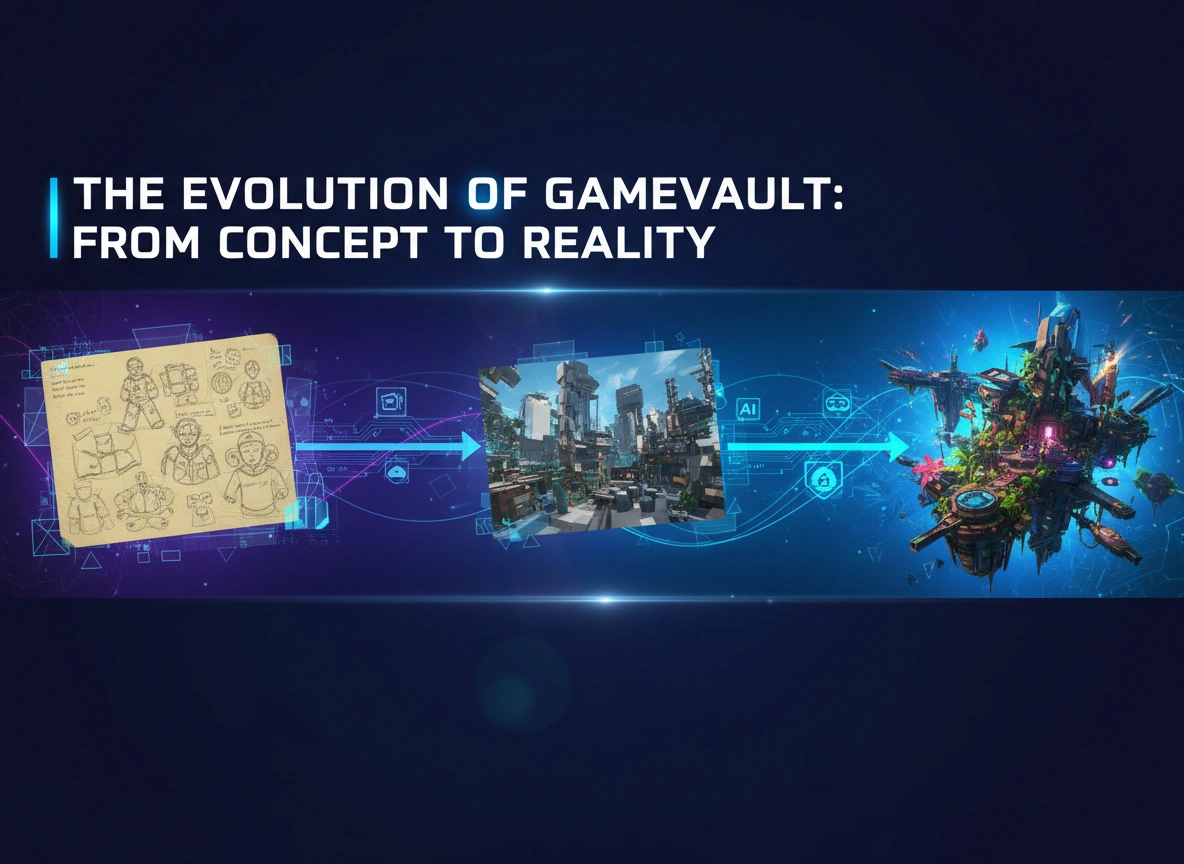
Digital storefronts dominate the modern gaming landscape. While these platforms offer unprecedented convenience, they also introduce a unique problem: gamers rarely own the media they purchase. If a storefront closes or removes a title, your access vanishes. This growing concern over digital ownership and game preservation sparked a revolutionary idea. That idea eventually became Gamevault.
Gamevault represents a massive shift in how players store, manage, and play their digital libraries. Instead of relying on external servers, users take control of their own collections through a self-hosted platform.
This article explores the comprehensive journey of Gamevault from its earliest conceptual stages to its current reality as a robust platform. We will look at the initial inspiration, the complex development process, the hurdles the team faced, and the lasting impact Gamevault has had on the gaming community.
The Spark of Inspiration
Every great software solution begins with a frustrating problem. For the creators of Gamevault, the frustration stemmed from fragmented gaming libraries and the strict digital rights management (DRM) policies enforced by major distributors. Gamers often found their collections scattered across half a dozen different launchers. Worse, older titles frequently disappeared from these platforms entirely, making game preservation nearly impossible.
The team envisioned a different approach. What if gamers could host their own private network, similar to a Plex server, but dedicated exclusively to video games?
This concept centered on true digital ownership. The goal was to build an environment where users could keep their DRM-free games safe, organize them beautifully, and access them easily from anywhere on their local network. The inspiration was clear: give control back to the player. By prioritizing self-hosting, the platform would allow gamers to preserve their favorite titles indefinitely without fearing server shutdowns or revoked licenses.
Navigating the Development Process
Turning a self-hosted gaming server from a neat idea into a functional, user-friendly reality requires meticulous planning. The development process of Game vault demanded a careful balance between robust backend engineering and sleek frontend design.
Building the Foundation
The initial phase focused heavily on architecture. The developers needed a backend capable of handling massive file structures, as modern video games often exceed 100 gigabytes. They chose technologies that favored speed, stability, and low resource consumption. The server needed to run efficiently on a variety of hardware, from high-end desktop computers to low-power network-attached storage (NAS) devices.
During this phase, the team mapped out how the server would communicate with the client application. They established secure local network protocols to ensure fast download speeds and seamless game launching directly from the user’s personal vault.
Designing the User Experience
A powerful backend means little if the user interface feels clunky. Gamers are accustomed to the polished, highly visual interfaces of mainstream digital storefronts. To compete for space on a gamer’s hard drive, Gamevault needed to look professional.
The design team focused on creating a visually rich application. They built systems to automatically pull high-quality box art, background images, and metadata for each game. The result was a clean, intuitive dashboard that felt instantly familiar to anyone who had ever used a modern gaming launcher.
Overcoming Major Challenges
Building a platform like Gamevault is not without its hurdles. The team encountered several significant roadblocks that threatened to derail the project during its early days.
Managing Diverse File Structures
Unlike movies or music files, which follow standard formats like MP4 or MP3, video games are incredibly complex. A single game might consist of an executable file, thousands of asset folders, registry keys, and prerequisites. Designing a system that could uniformly package, track, and launch these varied file structures proved exceptionally difficult.
Early iterations of the software struggled to launch older games that required specific environmental setups. The development team spent months refining the execution protocols to ensure that when a user clicked “Play,” the game would launch flawlessly, regardless of its age or file structure.
Automating Metadata Collection
Another major challenge involved game metadata. For the library to look professional, the software needed to automatically identify a game and download the correct title, release year, genre, and artwork. However, users often name their game folders inconsistently.
Building a scraping tool that could accurately guess the correct game based on loose folder naming conventions took extensive trial and error. The team had to integrate multiple external gaming database APIs and build a smart matching algorithm to minimize incorrect library entries.
Implementing Innovative Solutions
To solve these persistent challenges, the Gamevault team introduced several innovative features that set the software apart from basic file managers.
They implemented a robust tagging and indexing system. When a user drops a new DRM-free game into their designated server folder, Gamevault reads the directory, matches the data against extensive online databases, and populates the client interface almost instantly.
Furthermore, they developed intelligent client-side tracking. Gamevault does more than just store files; it tracks your playtime, keeps logs of your progress, and manages your game versions. If a user uninstalls a game to save local disk space, the title remains visible in their Gamevault library. When they want to play again, a single click pulls the files from their personal server back to their local machine at maximum network speeds.
The team also prioritized cross-platform accessibility. They recognized that modern gamers use various operating systems. By ensuring compatibility across different setups, they expanded their potential user base and reinforced the platform’s core mission of universal accessibility.
Impact on the Gaming Industry
Gamevault has created a noticeable ripple effect within the broader gaming industry. While it may not replace massive commercial storefronts, it has successfully carved out a vital niche focused on game preservation and digital ownership.
Shifting the Ownership Paradigm
For years, the industry narrative suggested that gamers must accept leasing their digital content. Gamevault challenges this narrative directly. It proves that there is a massive, dedicated audience that values owning their files. By providing a premium, polished experience for self-hosted games, Gamevault has legitimized the DRM-free movement. Storefronts that sell DRM-free titles have seen the benefit, as platforms like Gamevault give players a reason to actively purchase and download these specific versions.
Championing Media Preservation
Game preservation has become a critical topic as older digital storefronts shut down, taking hundreds of digital-only games with them. Gamevault offers a practical solution to this crisis. It empowers users to build their own private archives. Curators, historians, and everyday gamers now have a reliable, visually appealing tool to ensure that classic and indie titles remain playable for decades to come.
Conclusion
The evolution of Gamevault from a simple concept to a comprehensive reality represents a triumph for digital ownership. Through clever engineering, a dedication to user experience, and a deep understanding of what gamers truly want, the development team built a tool that solves real problems. They navigated complex file management hurdles and metadata challenges to deliver a polished, professional platform.
Today, Gamevault stands as a testament to the power of self-hosting. It empowers players to take control of their libraries, preserves gaming history, and offers a secure home for digital collections.
If you are tired of fragmented libraries and want to take true ownership of your digital media, it is time to explore self-hosting. Review your current DRM-free game collection, set up a basic home server, and download Gamevault to experience the future of game preservation for yourself.