
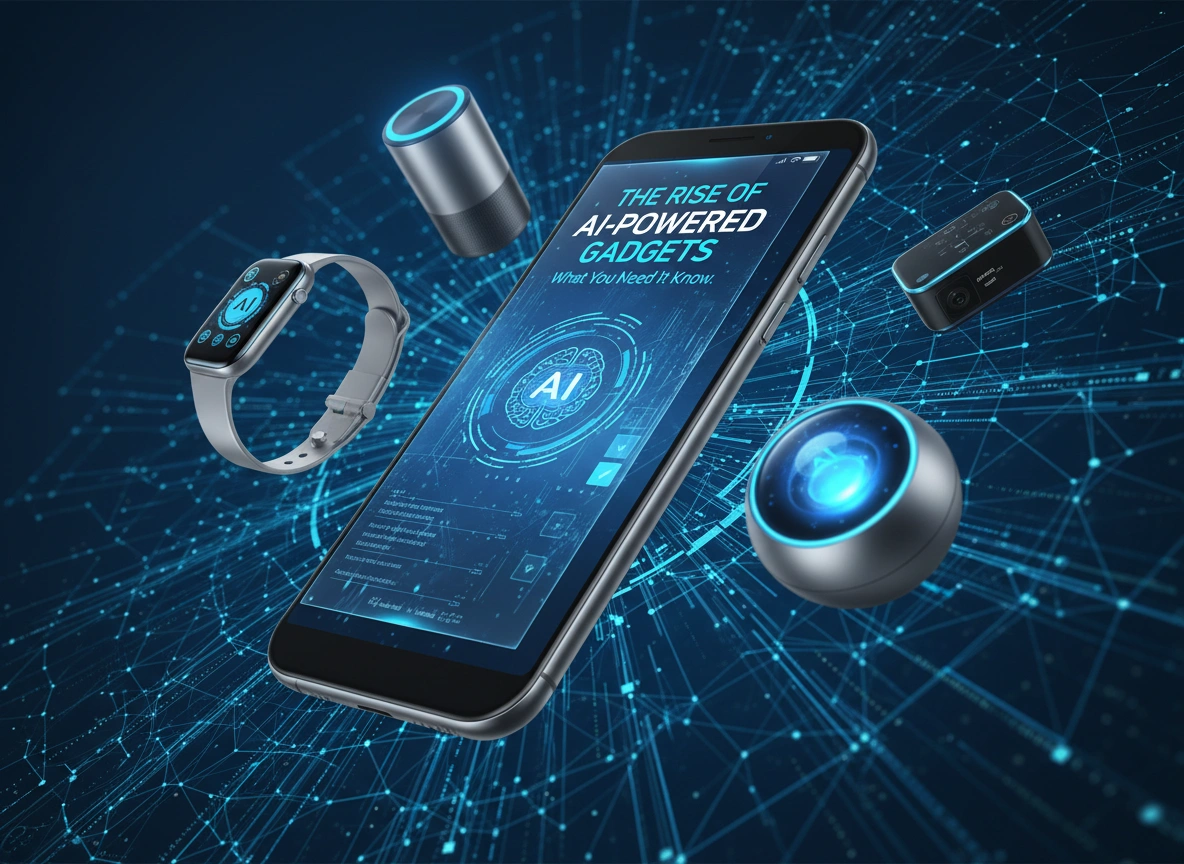
We have moved far beyond the era when “smart” simply meant a device could connect to the internet. Today, intelligence in consumer electronics implies agency, prediction, and personalization. Artificial Intelligence (AI) has quietly migrated from cloud servers directly into the devices in our pockets, on our wrists, and in our living rooms. This shift represents a fundamental change in how we interact with technology. It is no longer passive; it is proactive.
This article explores the evolution of AI in consumer hardware, examines the current landscape of intelligent devices, and discusses the critical benefits and challenges accompanying this technological surge. Whether you are an early adopter or a cautious observer, understanding this trajectory is essential for navigating the modern tech ecosystem.
From Connectivity to Cognition: The Evolution of Smart Gadgets
The journey to AI-powered hardware didn’t happen overnight. It began with the “Internet of Things” (IoT), where the primary goal was connectivity. A thermostat that you could control from your phone was revolutionary a decade ago. However, that thermostat was still a passive tool waiting for your command.
The First Wave: Command and Control
Initial smart gadgets relied heavily on specific user inputs. You pressed a button on an app, and a light turned on. While convenient, these devices lacked context. They didn’t know why you wanted the light on; they simply executed a binary command.
The Second Wave: Cloud-Based Intelligence
With the advent of voice assistants like Siri and Alexa, processing moved to the cloud. You could ask a question, and massive servers would parse your natural language and send a response. This made gadgets feel smarter, but they were tethered to an internet connection and suffered from latency.
The Current Wave: Edge AI
We are now entering the era of “Edge AI.” Modern processors, such as the Neural Processing Units (NPUs) found in smartphones and laptops, allow AI models to run locally on the device itself. This means your gadget can process data, recognize patterns, and make decisions without sending sensitive information to a remote server. This shift enables real-time responsiveness and enhanced privacy, fueling the explosion of truly intelligent hardware.
Current Applications: How AI is Reshaping Categories
AI is not just a feature; it is becoming the operating system of our physical world. It manifests across various categories, transforming mundane objects into sophisticated assistants.
Wearables and Health Tech
The wearable market has seen perhaps the most tangible benefits of AI integration. Smartwatches and fitness trackers no longer just count steps.
- Predictive Health Monitoring: Devices like the Oura Ring or Apple Watch analyze heart rate variability (HRV) and sleep patterns to predict illness before you feel symptoms. They use complex algorithms to establish your baseline and alert you to deviations.
- Real-Time Coaching: Running headphones and smart insoles can now analyze your gait in real-time, offering audio feedback to correct your form and prevent injury.
- Stress Management: By correlating physiological data with calendar events and activity levels, wearables can identify stress triggers and suggest immediate breathing exercises or breaks.
The Proactive Smart Home
The smart home is transitioning from a collection of remote-controlled switches to an autonomous ecosystem.
- Energy Optimization: AI thermostats like Ecobee or Nest learn your schedule and thermal preferences. More importantly, they can communicate with local utility grids to cool your home when energy is cheapest and cleanest, balancing comfort with sustainability.
- Security and Recognition: Modern security cameras use computer vision to distinguish between a stray cat, a delivery driver, and a potential intruder. They can recognize familiar faces and only alert you when a stranger is present, significantly reducing false alarms.
- Appliance Intelligence: Refrigerators can now track expiration dates and suggest recipes based on available ingredients, reducing food waste. Washing machines weigh loads and detect fabric types to adjust water usage and cycle time automatically.
Personal Assistants and Computing
The “Pin” and “r1” devices recently entering the market signal a move away from screen-based computing.
- Contextual Awareness: New AI assistants act as a layer over your digital life. They can read your emails, check your calendar, and listen to your meetings to automatically generate to-do lists or draft responses.
- On-Device Generative AI: Smartphones are now shipping with built-in Large Language Models (LLMs). This allows for features like real-time language translation during phone calls, advanced photo editing that can remove or move objects seamlessly, and tone-adjustment for text messages.
The Benefits of an AI-Integrated Life
The proliferation of these gadgets promises to streamline our existence in meaningful ways.
Hyper-Personalization
Standard software treats every user the same. AI-powered gadgets treat every user as a unique dataset. Your noise-canceling headphones can adapt to your specific ear shape and hearing profile. Your coffee maker can learn exactly how strong you like your brew in the morning versus the afternoon. This tailored experience increases satisfaction and utility.
Efficiency and Automation
By offloading routine decisions and tasks to AI, we reclaim cognitive bandwidth. If your house automatically manages the lights, temperature, and security, and your phone automatically filters spam and summarizes long emails, you have more mental energy for creative work and family time.
Accessibility
AI is a massive leveler for accessibility. Glasses that can describe the visual world to the blind, hearing aids that can isolate specific voices in crowded rooms, and voice interfaces that allow those with limited mobility to control their environment are life-changing applications of this technology.
Challenges and Ethical Considerations
Despite the glossy marketing, the rise of AI gadgets brings significant concerns that consumers must weigh carefully.
Data Privacy and Security
To work effectively, AI needs data—your data. It needs to know your schedule, your health metrics, your voice, and your home layout.
- Local vs. Cloud: While Edge AI improves privacy by keeping data on-device, many gadgets still sync with the cloud for updates and advanced processing. Consumers must scrutinize privacy policies to understand who owns their data and how it is being used.
- The Surveillance Risk: A house full of cameras and microphones is, by definition, a surveillance network. The security of these devices is paramount to prevent unauthorized access by hackers or overreach by corporations and governments.
E-Waste and Obsolescence
AI moves fast. A gadget purchased today might be hardware-incompatible with the software updates of tomorrow. This accelerates the cycle of planned obsolescence, leading to increased electronic waste. Manufacturers need to address how long these intelligent devices will be supported and how they can be recycled responsibly.
Dependency and Skill Atrophy
As we outsource more tasks to AI, we risk losing certain skills. If your car always drives for you, do you lose the ability to react in an emergency? If your phone always corrects your grammar and tone, does your writing ability suffer? Maintaining a balance between assistance and autonomy is a crucial personal challenge.
Algorithmic Bias
Gadgets are only as unbiased as the data they are trained on. We have already seen instances of smart soap dispensers failing to recognize darker skin tones or voice assistants struggling with certain accents. Ensuring that AI hardware works equally well for all demographics remains a significant engineering and ethical hurdle.
The Future: Ambient Computing
Looking ahead, the screen will likely become less important. We are moving toward “Ambient Computing,” where technology fades into the background.
Imagine a future where you don’t carry a phone. Instead, your environment is responsive. You speak to the room, and it answers. You look at a surface, and information is projected onto it via smart glasses or contact lenses. Your health is monitored continuously by your clothing, and your environment adjusts to your mood without you touching a dial.
In this future, the “gadget” disappears, leaving only the intelligence.
Conclusion
The rise of AI-powered gadgets is not a fleeting trend; it is the next standard of consumer technology. These devices offer the promise of a life that is safer, healthier, and more efficient. They grant us the power of personalization and the luxury of automation.
However, this convenience comes with a cost. It requires a transaction of trust and data. As we welcome these intelligent machines into our intimate spaces, we must remain vigilant about privacy, security, and sustainability. The best approach is informed adoption: embrace the tools that genuinely add value to your life, but always read the fine print.
Actionable Next Steps
- Audit Your Devices: Check the privacy settings on your current smart devices. Disable microphone or camera access for apps that don’t strictly need it.
- Research Edge AI: When buying new electronics, look for devices that prioritize on-device processing (Edge AI) for better privacy.
- Evaluate Utility: Before buying the latest AI gadget, ask yourself: Does this solve a real problem, or is it just adding complexity?
Please click here for more info.