
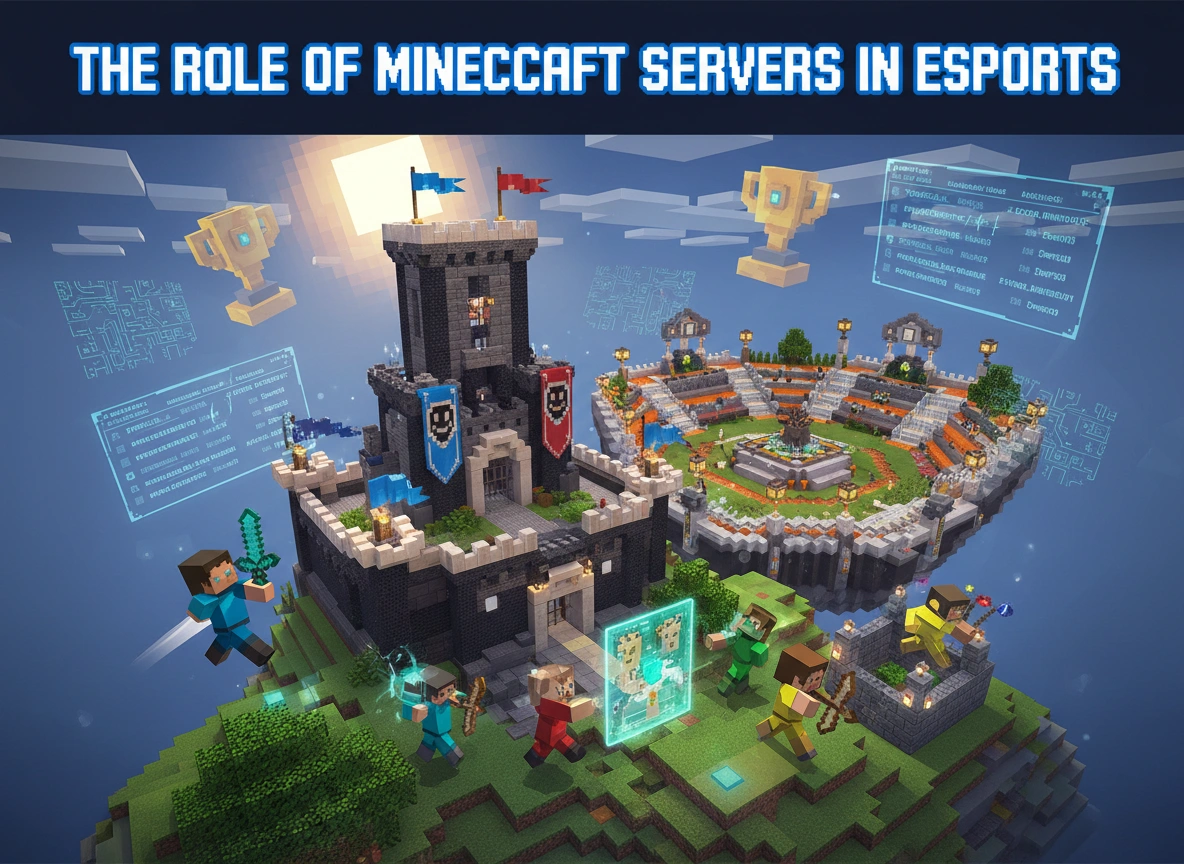
When you think of competitive gaming, first-person shooters and multiplayer online battle arenas usually come to mind. Yet, a block-building game originally designed for creative exploration has quietly built one of the most dedicated competitive communities in the industry. Minecraft esports is a massive, thriving ecosystem.
Custom Minecraft servers act as the arenas, rule-makers, and broadcasters of this unique competitive scene. By utilizing powerful server modifications, dedicated developers transformed a simple sandbox game into a highly competitive platform.
This article explores how Minecraft servers evolved to support competitive gaming, their broader impact on the esports industry, and the unique opportunities they create for both organizers and players.
The Evolution of Minecraft in Competitive Gaming
Minecraft was never meant to be an esports title. Its core mechanics focused on mining, crafting, and surviving against computer-controlled mobs. However, the open-source nature of its server software allowed players to change the rules.
From Sandbox to Stadium
In the early days, competitive Minecraft meant simple player-versus-player (PvP) combat on vanilla survival servers. Players would gather resources, craft armor, and fight to the death. While fun, it lacked the structure needed for organized esports.
The introduction of server plugins and custom code changed everything. Server administrators gained the ability to manipulate game mechanics, create automated arenas, and design custom game modes. This led to the creation of “minigames”—short, structured matches with specific win conditions. Hunger Games (later known as Survival Games), BedWars, and SkyWars quickly became fan favorites. These game modes required entirely different skill sets, from bridging quickly across the void to precise inventory management and rapid click rates.
By shifting the heavy lifting from the player’s computer to the server side, organizers could ensure fair play, prevent cheating, and host hundreds of players in a single unified event.
Major Players: Servers Leading the Esports Charge
Specific servers have played a monumental role in standardizing competitive Minecraft. They act as both game developers and tournament organizers.
Hypixel and Minigame Mastery
Hypixel stands as a titan in the Minecraft server space. With tens of thousands of concurrent players daily, it has established the gold standard for competitive minigames. Game modes like BedWars and SkyWars are not just casual pastimes; they have their own ranked modes, leaderboards, and dedicated professional players.
Hypixel’s impact on esports stems from its accessibility. Anyone can log in and compete. The server tracks statistics meticulously, allowing players to build a competitive resume. Independent organizers frequently use Hypixel’s private game features to host localized tournaments, utilizing the server’s robust, lag-free infrastructure.
The MCC (Minecraft Championship) Phenomenon
The Minecraft Championship, organized by Noxcrew, represents the pinnacle of modern Minecraft esports. Unlike open-access servers, MCC is an invite-only tournament featuring popular content creators and highly skilled players.
Noxcrew builds entirely custom servers dedicated exclusively to these events. They design unique, multi-stage game modes that test different aspects of Minecraft proficiency—from parkour and puzzle-solving to team-based combat. The server architecture required to host an MCC event is incredibly complex. It must support custom textures, massive automated map changes, and real-time score tracking for dozens of teams simultaneously.
MCC proves that Minecraft can draw viewership numbers that rival major League of Legends or Counter-Strike tournaments. The custom server acts as a digital stadium, perfectly tuned for broadcast and spectator engagement.
Opportunities for Players and Organizers
The decentralized nature of Minecraft servers creates a unique landscape for the esports industry. Traditional esports rely on the game developer (like Riot Games or Valve) to dictate the competitive format. In Minecraft, the community holds the power.
A Low Barrier to Entry
For players, the barrier to entry is incredibly low. You only need a copy of the game and a decent internet connection. Competitive Minecraft rewards raw mechanical skill, game knowledge, and reaction time. Many professional esports players in other titles point to competitive Minecraft as their first training ground.
For organizers, launching an esports event does not require millions of dollars in licensing fees. A dedicated community member can rent a server, install open-source tournament plugins, and host a competitive event by the weekend. This grassroots approach allows for constant experimentation. If a game mode fails, the server can simply pivot to a new concept within days.
Unprecedented Customization
Server owners have ultimate control over the competitive environment. You can balance weapons, alter gravity, or completely change how combat works. When the core game updated its combat mechanics—a move that divided the competitive community—server owners simply used plugins to revert the combat rules back to the preferred competitive standard. This level of control ensures the competitive scene never has to suffer from an unwanted game update.
Overcoming Challenges in Minecraft Esports
Hosting competitive events on a platform not originally built for esports comes with significant hurdles. Server owners must constantly innovate to maintain competitive integrity.
Balancing Mechanics and Server Lag
Minecraft is notoriously resource-heavy. Calculating the movements, combat hits, and block placements of a hundred players in real-time puts immense strain on server hardware. “TPS” (Ticks Per Second) is the lifeblood of competitive Minecraft. A standard server runs at 20 TPS. If the server lags and drops below this, hit registration fails, block placements glitch, and competitive integrity is ruined.
To combat this, server engineers have developed highly optimized server forks (custom versions of the server software) that strip away unnecessary background processes. Organizers also distribute the load across multiple servers using proxy networks, ensuring that heavy action in one arena does not impact players in another.
Combating Unfair Advantages
Cheating remains a persistent challenge. Because Minecraft allows for client-side modifications, players can use altered software to gain unfair advantages, such as aimbots or x-ray vision. Competitive servers must employ advanced, custom-built anti-cheat systems. These systems monitor player movement patterns and click speeds, automatically flagging and removing bad actors to maintain a fair playing field.
The Community-Driven Heart of Minecraft Esports
What truly sets Minecraft apart in the esports space is its deeply ingrained community focus. Traditional esports often feel corporate and highly formalized. Minecraft esports feels like a massive, global neighborhood tournament.
The developers coding the anti-cheat plugins, the builders designing the arenas, and the administrators running the events are often players themselves. This grassroots foundation breeds immense loyalty. Fans do not just watch the tournaments; they log onto the same servers to practice the exact game modes they just watched their favorite creators play.
This tight feedback loop between viewing and playing drives immense engagement. It also fosters a collaborative environment where server owners frequently share code, map designs, and best practices to elevate the entire competitive ecosystem.
Conclusion
Minecraft servers have completely redefined what a competitive gaming platform can look like. By offering deep customization, reliable infrastructure, and a grassroots approach to tournament organization, these servers turned a simple building game into an esports powerhouse.
As server technology continues to improve, we can expect even larger events, more complex game modes, and larger prize pools. The blocky arenas of Minecraft will undoubtedly remain a crucial pillar of the esports industry for years to come.
If you want to understand the mechanics of these events further, start by logging into major public servers and exploring their competitive modes. Pay attention to how the servers handle matchmaking, lobby systems, and game pacing. You might just find the inspiration to host your own competitive event.
Please visit website for more info.