
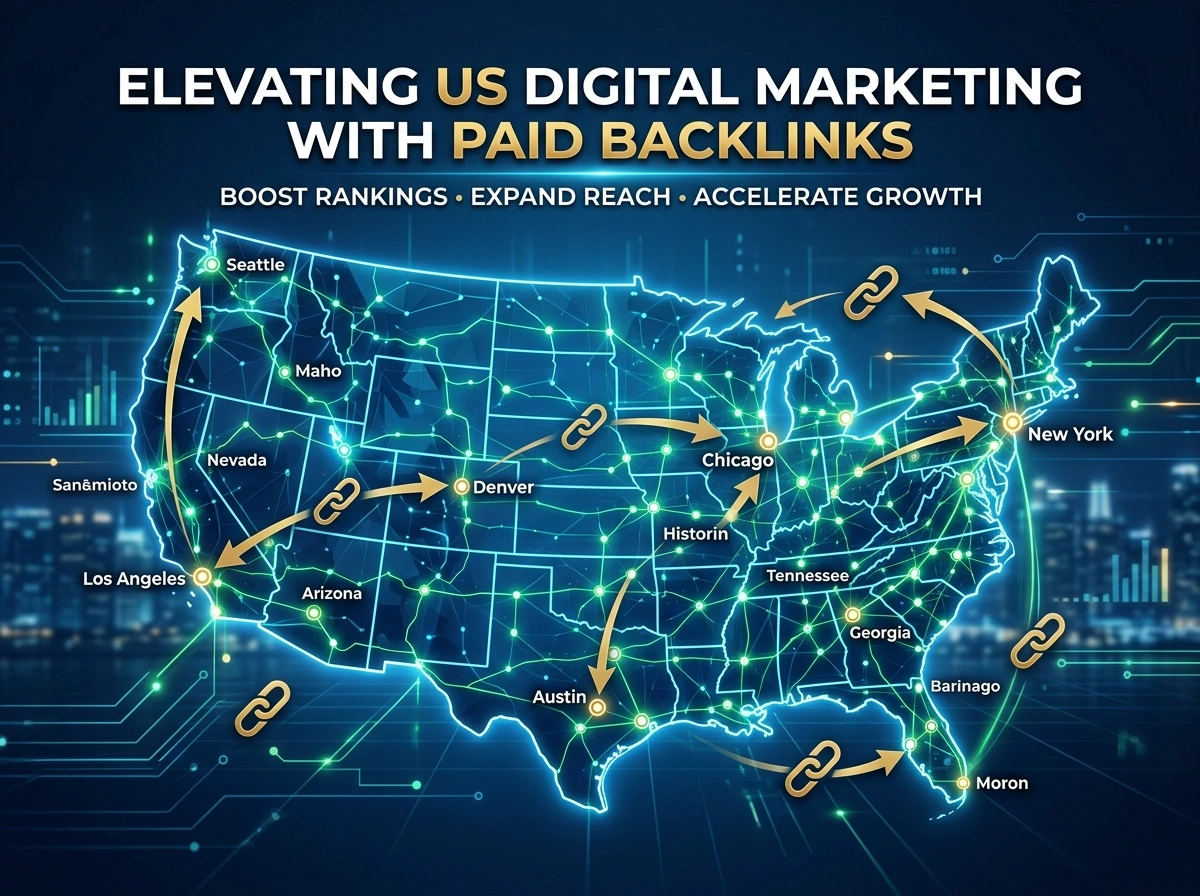
Establishing a prominent online presence in the United States requires more than just publishing great content. The American digital landscape is fiercely competitive, with millions of businesses vying for the top spots on search engine results pages. To stand out, companies must build digital authority, a metric heavily influenced by how other websites interact with yours.
Search engines look for signals that indicate your website is trustworthy, relevant, and authoritative. One of the strongest signals remains the backlink. When reputable websites link to your content, search algorithms interpret these connections as endorsements. However, earning these endorsements organically can take months or even years of persistent networking and outreach, a timeline that many growing businesses simply cannot afford.
This reality has led many marketing teams to explore professional link acquisition. By strategically investing in paid placements, businesses can accelerate their SEO timelines and achieve measurable ranking improvements. This guide explores the mechanics of paid link acquisition, offering a roadmap for executing this strategy effectively and safely within the highly competitive US market.
Navigating Digital Marketing in the US Market
The United States represents one of the most lucrative and saturated digital markets globally. Companies operating within this space face unique challenges, primarily driven by the sheer volume of competitors targeting identical search queries. Every niche, from enterprise software to local home services, features established players who have spent years fortifying their search engine optimization strategies.
To break into these top positions, new or growing businesses must understand that digital marketing in the US operates on a pay-to-play or invest-to-win model. While organic search traffic is technically free, securing the rankings necessary to generate that traffic requires substantial investment in content creation, technical website optimization, and authority building. Relying solely on passive strategies—such as publishing a blog post and hoping others naturally link to it—rarely yields meaningful results in such a crowded arena.
Instead, successful US-based marketers adopt proactive, aggressive strategies. They analyze competitor backlink profiles, identify content gaps, and execute targeted campaigns to close the authority deficit. Recognizing the resources required to run successful outreach campaigns internally, many turn to professional services to bridge the gap. This shift transforms link building from a tedious, uncertain task into a predictable, scalable marketing channel.
The Core Importance of Backlinks in SEO
At their foundation, backlinks serve as the foundational architecture of the internet, connecting disparate pages into a cohesive web of information. For search engines, these links function as a sophisticated voting system. When a high-authority domain links to a smaller website, it passes along a portion of its credibility, often referred to as “link equity” or “link juice.”
Not all votes are created equal. A link from an established, highly trafficked industry publication carries significantly more weight than a link from a newly created, obscure blog. Search algorithms evaluate the referring domain’s overall authority, the contextual relevance of the linking page, and the specific text used in the hyperlink to determine how much value to assign to the connection.
Furthermore, backlinks help search engine crawlers discover new pages faster. When your site receives consistent links from actively crawled domains, your new content gets indexed and ranked more rapidly. This structural importance means that a robust backlink profile acts as a multiplier for all your other SEO efforts. Even the most technically sound website with exceptional content will struggle to rank for competitive US search terms without a corresponding foundation of authoritative backlinks to validate its worth.
The Strategy of Buying Backlinks in the US Market
As businesses recognize the necessity of link equity, the approach to acquiring it has evolved. Manual outreach—emailing hundreds of webmasters in hopes of securing a single guest post—often yields low conversion rates and consumes immense administrative resources. To circumvent this bottleneck, marketing agencies and in-house teams have standardized the practice of professional link procurement.
For companies aiming to accelerate their growth, choosing to buy backlinks usa represents a direct path to securing high-quality, relevant placements without the unpredictable variables of cold outreach. This strategy involves partnering with established link-building agencies or directly compensating webmasters to feature your content or insert links into existing, high-performing articles.
The strategy hinges on identifying specific pages on your website that require an authority boost to overtake competitors. Marketers typically target commercial pages, high-converting blog posts, or core service offerings. By acquiring links pointing directly to these assets, businesses can effectively manipulate the search landscape in their favor. The focus has shifted entirely away from the sheer volume of links to the strict quality and relevance of each placement, ensuring that every dollar spent directly contributes to upward ranking mobility.
Key Benefits and Strategic Considerations
Executing a paid link acquisition campaign offers several distinct advantages over traditional, passive methods. However, it also introduces specific risks that require careful management and oversight.
Predictability and Speed
The primary benefit of purchasing backlinks is control. You dictate the target URLs, the anchor text, and the timeline. This predictability allows marketing teams to forecast ranking improvements and align their SEO efforts with broader corporate initiatives, such as product launches or seasonal campaigns. Instead of waiting six months to see if an outreach campaign was successful, businesses can secure guaranteed placements and observe ranking shifts within a matter of weeks.
Resource Allocation
Building an internal team capable of executing high-level digital PR and link building is incredibly expensive. It requires SEO strategists, content writers, outreach specialists, and costly software subscriptions. Buying backlinks through specialized vendors converts a heavy fixed operational cost into a scalable, variable marketing expense.
Quality Control and Considerations
The main consideration when purchasing links revolves around quality control. Search engines actively penalize websites that participate in manipulative link schemes, utilizing low-quality Private Blog Networks (PBNs) or irrelevant link farms. Therefore, businesses must prioritize quality over quantity. A single link from a real website with genuine US-based organic traffic is worth exponentially more than fifty links from newly registered, empty domains. Marketers must rigorously vet their sources to ensure they are investing in assets that will withstand future algorithm updates.
Integrating Paid Backlinks into a Broader SEO Strategy
Purchasing backlinks should never operate as a standalone marketing tactic. Search engines evaluate the holistic quality of a website. If a site boasts an incredibly strong backlink profile but suffers from a terrible user experience and thin content, the links will fail to generate lasting results.
Technical SEO Foundations
Before investing in link acquisition, ensure your website is technically flawless. This means optimizing page load speeds, ensuring mobile responsiveness, and fixing any broken internal links or redirect chains. Search engine crawlers need to navigate your site efficiently to distribute the acquired link equity to your other pages. A solid technical foundation ensures that you maximize the return on your backlink investment.
Content Quality Alignment
The pages receiving the paid links must satisfy user intent. If you push a page to the top of the search results, but users immediately click away because the content is unhelpful, search engines will notice the high bounce rate and adjust your rankings downward. Paid links act as the fuel, but your content is the engine. Ensure your landing pages feature comprehensive, well-researched, and engaging information that effectively answers the user’s search query.
Internal Linking Architecture
Once you acquire a powerful external backlink to a specific page, you can pass that authority throughout your own website using strategic internal links. By linking from your newly empowered page to other relevant service pages or blog posts, you create an internal distribution network that lifts the overall visibility of your entire domain.
Best Practices for Professional Link Acquisition
To execute a successful paid link strategy in the US market, marketers must adhere to a strict set of best practices designed to mimic natural link growth and avoid algorithmic penalties.
Vetting Link Sources
Never purchase links blindly. Request sample placements from your vendor and analyze the target domains using industry-standard SEO tools. Look for a steady history of organic traffic, a clean backlink profile free of spam, and a healthy ratio of outbound to inbound links. The website should look and function like a real business or publication, not a repository for paid articles.
Anchor Text Diversity
Search engines monitor the exact text used in hyperlinks. If every backlink pointing to your website uses the exact same highly commercial keyword, it creates a massive red flag for manipulation. Maintain a natural anchor text profile by mixing exact match keywords with partial match phrases, branded terms, and generic text like “read more” or the raw URL itself.
Pacing and Link Velocity
Acquiring 500 backlinks in a single week for a website that previously earned one link a month looks entirely unnatural. Professional link building requires pacing. Gradually increase your link velocity over time, establishing a consistent cadence of acquisition. This steady growth signals to search engines that your website is consistently publishing valuable content that others naturally want to reference.
Maximizing Your Digital Authority Moving Forward
Succeeding in the highly competitive US digital market requires a multifaceted approach to search engine optimization. While exceptional content and technical proficiency form the baseline of any good strategy, authority dictates who ultimately wins the top positions.
Professional link acquisition provides a reliable, scalable method for building that necessary authority. By treating link building as a strategic investment rather than a passive byproduct of content creation, businesses can actively engineer their search engine success. The key lies in maintaining rigorous quality standards, partnering with transparent and ethical vendors, and ensuring that every acquired link supports a broader, user-focused digital marketing ecosystem.
When executed methodically, investing in high-quality placements will transform your website’s visibility, driving sustainable organic traffic and delivering a measurable return on your marketing investment for years to come.