
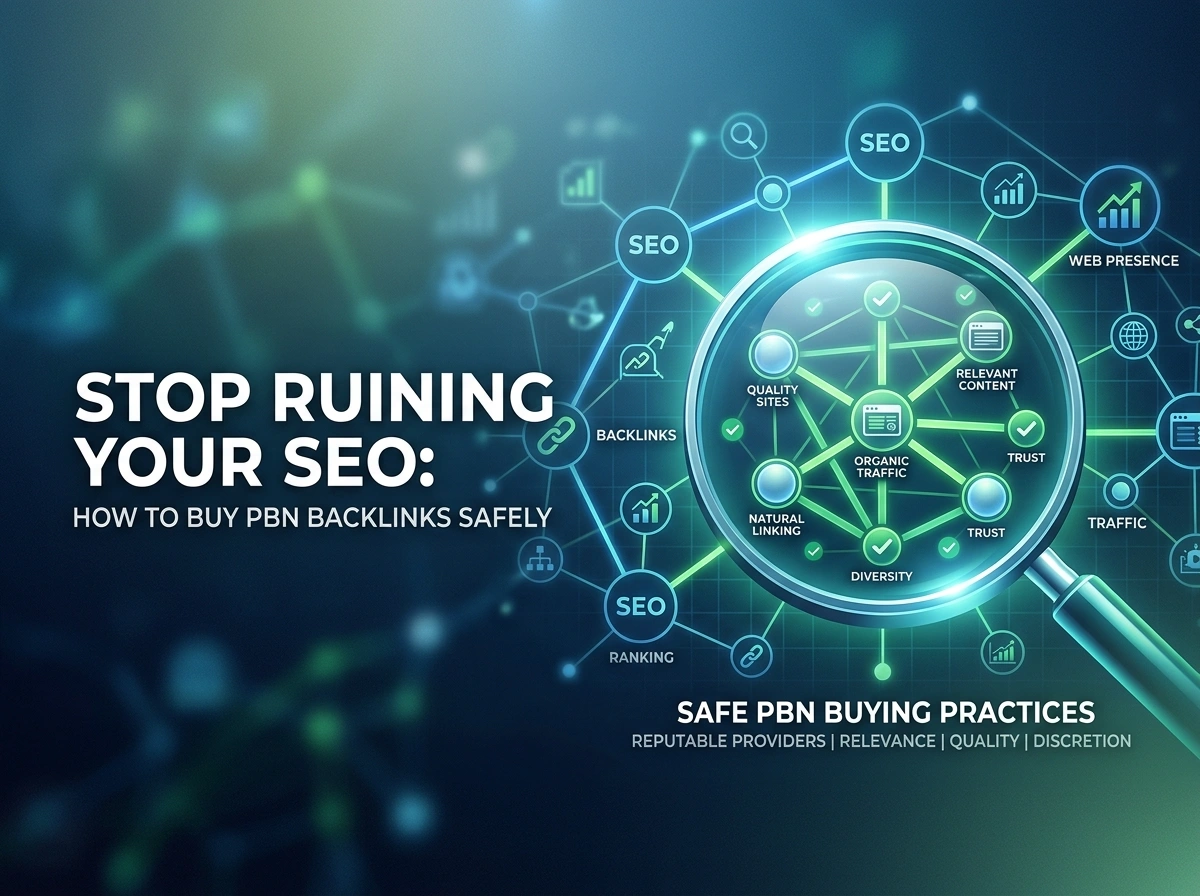
Building a robust link profile requires time, resources, and a strategic mindset. Many website owners turn to Private Blog Networks (PBNs) to accelerate their search engine optimization efforts. When executed correctly, this approach channels immense authority directly to your most important pages, bypassing the agonizing wait associated with traditional outreach. However, navigating the market of private networks requires a high degree of caution and technical knowledge.
A single misstep in your link building strategy can trigger devastating algorithmic penalties. Search engines constantly update their algorithms to detect artificial manipulation, and poorly constructed networks are always their primary targets. Website owners often fall victim to low-quality providers because they fail to recognize the technical footprints that expose these networks to search engine crawlers.
This comprehensive guide breaks down the mechanics of private blog networks and highlights the most dangerous pitfalls to avoid. You will learn how to evaluate link providers, understand the technical markers of high-quality domains, and implement these powerful assets safely. By the end of this article, you will possess the knowledge necessary to protect your website while securing the ranking power you need to dominate your niche.
Understanding the mechanics of PBN backlinks
A Private Blog Network is a collection of high-authority websites controlled by a single entity, built specifically to link out to target websites. These networks are typically constructed using expired domains that have already accumulated significant trust, backlink profiles, and historical authority. By taking ownership of these domains, SEO professionals can harness their existing power and funnel it toward their own commercial projects.
The primary appeal of this strategy is absolute control. Traditional link building methods rely on third-party webmasters agreeing to place your link. You rarely get to dictate the anchor text, the placement of the link on the page, or the surrounding contextual content. Private networks remove this friction entirely. You control the narrative, the exact anchor text ratio, and the velocity at which the links are built.
Despite these advantages, the barrier to entry for building a safe network is incredibly high. Managing multiple domains requires diverse hosting environments, unique IP addresses, and distinct content management systems. When website owners lack the budget or technical expertise to build their own network, they turn to specialized vendors. This is where the risk of purchasing compromised links becomes a serious threat to your organic traffic.
Common mistakes when buying PBNs
Purchasing links from private networks can yield incredible results, but buyers frequently make critical errors that compromise their entire SEO campaign. Avoiding these common mistakes is the first step toward a sustainable ranking strategy.
Ignoring the network’s digital footprint
Search engines employ sophisticated methods to identify related websites. A “footprint” refers to any shared technical characteristic that connects multiple domains back to a single owner. The most frequent mistake buyers make is purchasing links from networks that share the same IP subnet, nameservers, or hosting provider. If Google detects that fifty sites linking to you all reside on the same server, they will devalue those links immediately.
Other common footprints include identical website themes, shared Google Analytics tracking codes, and repetitive plugin configurations. Before purchasing any link, you must verify that the provider utilizes strict zero-footprint hosting protocols.
Over-optimizing your anchor text
Because private networks offer total control over anchor text, SEOs often succumb to the temptation of over-optimization. They aggressively use exact-match commercial keywords for every single link they build. If your target keyword is “best plumbing services,” having 80% of your inbound links use that exact phrase looks entirely unnatural to search engine algorithms.
A natural backlink profile consists of branded anchors, naked URLs, generic phrases like “click here,” and partial-match keywords. When buying powerful links, you must maintain a diverse and realistic anchor text ratio to avoid triggering spam filters.
Purchasing from public “private” networks
The defining characteristic of a PBN is that it must remain private. Unfortunately, many vendors openly advertise their network domains to attract buyers. They post lists of their URLs on public forums, social media groups, and gig economy websites.
If a vendor is willing to show you their network before you make a purchase, they are showing it to everyone else—including search engine spam teams. Buying links from these exposed networks is incredibly dangerous. A truly private network operates in total secrecy to protect its assets and its clients.
How to identify high-quality PBN links
Separating premium networks from toxic link farms requires a sharp eye and a thorough understanding of SEO metrics. High-quality networks mimic real websites so perfectly that they are indistinguishable from legitimate businesses or blogs.
Evaluate the backlink profile and historical metrics
A domain is only as powerful as the links pointing to it. Before a link provider places your link on one of their sites, that site must possess genuine authority. Look for domains with high Domain Authority (DA) or Domain Rating (DR), but do not stop at vanity metrics.
Inspect the domain’s Trust Flow to ensure its inbound links come from reputable sources. A domain might have a high DR due to thousands of spam comments, which provides absolutely no value to your website. The best network sites have clean, contextually relevant histories free from past spam abuse.
Assess the content and site design
Search engines increasingly prioritize user experience and content quality. If a network site is filled with cheap, spun content or poorly translated articles, it will inevitably be penalized. High-quality providers invest in native writers who produce engaging, grammatically correct articles.
Furthermore, inspect the design of the websites. Premium networks use premium themes, custom logos, and varied layouts. They include essential pages like About Us, Contact, and Privacy Policies. If the sites look like they were built in five minutes using a default template, you should take your budget elsewhere.
The severe risks of poor quality backlinks
The consequences of integrating toxic links into your SEO strategy extend far beyond a temporary dip in rankings. Search engines treat algorithmic manipulation severely, and the fallout can damage your business operations.
Manual actions and algorithmic devaluations
Google issues manual actions to websites that egregiously violate their webmaster guidelines. If human reviewers detect that you are participating in a link scheme, they can remove your website from their search index entirely. Recovering from a manual action requires submitting extensive reconsideration requests and conducting painful link audits.
Even without a manual penalty, algorithms like Google Penguin automatically detect and devalue spammy links. If your rankings are entirely dependent on low-quality private networks, an algorithmic update can wipe out your organic traffic overnight, leaving you stranded on page ten of the search results.
Wasted marketing budgets
SEO requires a significant financial investment. When you spend thousands of dollars on cheap, easily detectable links, you are essentially setting your marketing budget on fire. These links might provide a fleeting boost, but they will inevitably be discovered and neutralized. Instead of generating a return on investment, you will be forced to spend additional capital hiring professionals to clean up your damaged link profile.
Best practices for safe implementation
Using private networks successfully requires a disciplined, strategic approach. You must blend these powerful assets into a broader, holistic marketing campaign.
Maintain a natural link velocity
Link velocity refers to the speed at which your website acquires new backlinks. If a completely new website suddenly gains fifty high-authority links in three days, it raises immediate red flags. Search engines expect organic growth to be gradual and consistent.
When implementing powerful links, drip-feed them slowly over several weeks or months. This simulates the natural discovery of your content by other webmasters and helps you fly under the algorithmic radar.
Diversify your overall link profile
Private network links should never constitute 100% of your backlink profile. They are best used as a supplement to traditional white-hat link building efforts. Secure foundational links through directory citations, guest posts on legitimate industry blogs, and digital PR campaigns.
By building a base of standard links, you create a buffer that makes your network links look like natural outliers rather than a coordinated manipulation attempt. If you are looking to scale your authority securely and Buy pbn backlinks, always ensure you source them from industry leaders who prioritize footprint management and content quality.
Target inner pages strategically
Many website owners make the mistake of pointing every single acquired link directly at their homepage. In the real world, internet users link to specific articles, product pages, and resources.
To maximize the effectiveness of your campaign, distribute your link equity across your entire domain. Target your most profitable service pages, comprehensive blog posts, and category hubs. This approach elevates the overall authority of your entire domain, making it easier for all your pages to rank simultaneously.
Frequently asked questions about PBNs
To further clarify the complexities of private blog networks, we have compiled answers to the most common questions website owners ask before investing in this strategy.
Are PBNs considered illegal?
Private blog networks are not illegal in any legal sense; you will not face criminal charges for using them. However, they do strictly violate Google’s Webmaster Guidelines. They are considered a “black hat” or “grey hat” SEO tactic. The risk is entirely related to search engine penalties, not legal prosecution.
How many links do I need to rank on page one?
There is no universal number. The amount of link equity required depends entirely on the competitiveness of your niche and the strength of the websites currently occupying the top spots. A local plumbing company might only need five high-quality links to dominate their city, whereas a national software provider might need hundreds of links to compete with established giants.
Can I build my own network instead of buying links?
You can absolutely build your own network. Doing so gives you total control and the highest level of security. However, building a safe network is incredibly expensive and time-consuming. You must purchase expired domains at auction, pay for dozens of separate hosting accounts, design each site uniquely, and continuously write content for all of them. For most businesses, purchasing placements from an established, reputable vendor is far more cost-effective.
Next steps for your link building strategy
Navigating the competitive landscape of search engine optimization demands powerful tools and strategic execution. Private blog networks remain one of the most effective methods for generating targeted traffic and securing top positions for lucrative commercial keywords.
Success in this arena requires absolute diligence. You must meticulously evaluate your link providers, insist on pristine footprint management, and maintain a natural, diversified link profile. By prioritizing quality over quantity and implementing these assets with care, you can safely leverage the immense ranking power of private networks to achieve your most ambitious digital marketing goals.