
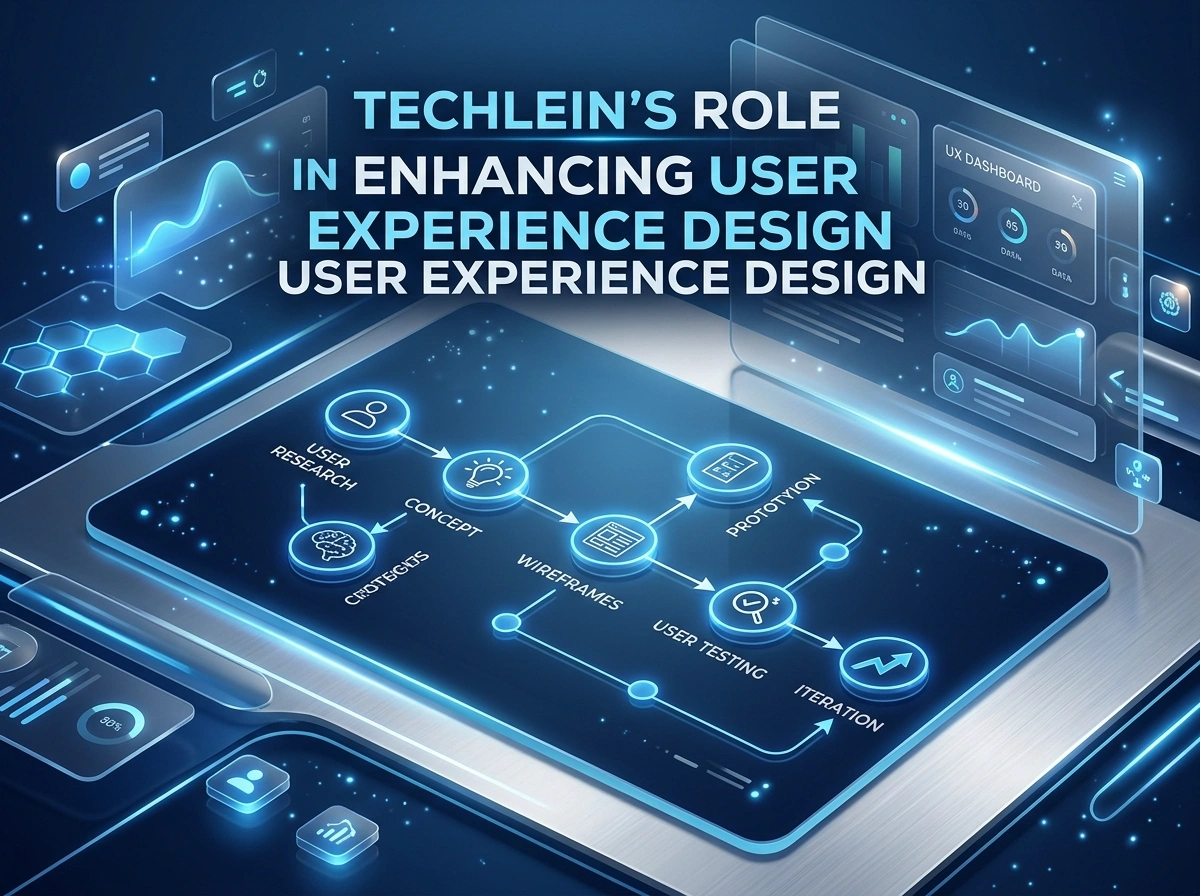
User expectations have never been higher. Today, a digital product must be more than just functional; it must be intuitive, seamless, and deeply engaging. As organizations scramble to meet these demands, the tools they use dictate the quality of the experiences they deliver. Enter Techlein, a platform that fundamentally shifts how design professionals and tech stakeholders approach the user experience (UX) lifecycle.
If you want to build products that resonate with users and stand out in a crowded market, traditional design workflows no longer suffice. You need an ecosystem that bridges the gap between ideation and deployment. In this guide, we will cover the evolution of UX design, explore the specific tools Techlein offers to streamline workflows, examine how it transforms team collaboration, and highlight its critical role in building accessible digital environments.
The Evolution of UX Design: From Static Pages to Dynamic Experiences
To understand the value of modern platforms like Techlein, you must first look at how user experience design has evolved. In the early days of the web, design was a purely visual exercise. Teams focused on creating static, brochure-like pages where aesthetics often took precedence over usability. The design process was linear and rigid, leaving little room for iterative improvement based on actual user behavior.
As technology advanced, so did user expectations. The introduction of mobile devices and complex web applications forced a shift toward user-centricity. Designers had to consider responsive layouts, gesture controls, and complex state management. This shift transformed UX from a visual discipline into a strategic necessity. Today, UX design encompasses psychology, data analysis, and system architecture.
However, this increased complexity brought new challenges. Design teams found themselves bogged down by fragmented toolchains. They used one application for wireframing, another for high-fidelity mockups, and entirely different platforms for prototyping and user testing. This fragmentation slowed down iteration cycles and created silos between departments. Techlein emerged as a direct response to this friction, consolidating the design process into a cohesive, intelligent platform.
Streamlining Workflows: Techlein’s Core Features and Tools
Techlein eliminates the friction of jumping between disconnected applications. By centralizing the design workflow, it allows you to focus on solving user problems rather than managing files and software updates. The platform offers a robust suite of tools engineered to accelerate the design process without sacrificing quality.
Here is a deep dive into the specific features that make Techlein an essential asset for modern design teams:
- Intelligent Component Libraries: Techlein allows teams to build and maintain dynamic design systems. When you update a master component, such as a primary button or navigation bar, those changes instantly propagate across all associated files and prototypes. This ensures visual consistency across massive enterprise applications.
- High-Fidelity Prototyping Engine: You no longer need separate software to demonstrate interactions. Techlein features an advanced prototyping engine that supports micro-interactions, conditional logic, and state changes. You can create realistic, interactive models of your product that mimic the final coded version perfectly.
- Integrated Usability Testing: Testing your designs traditionally required exporting files to a third-party service. Techlein integrates usability testing directly into the canvas. You can record user sessions, track click heatmaps, and gather qualitative feedback on your prototypes without ever leaving the platform.
- AI-Assisted Layout Generation: Techlein uses machine learning to help designers work faster. The platform can analyze your initial wireframes and suggest optimized layouts based on established UX best practices. This feature significantly reduces the time spent on repetitive pixel-pushing tasks.
Bottom line: Techlein replaces fragmented design software with a unified, intelligent workspace, allowing you to iterate faster and maintain strict consistency across complex products.
Bridging the Gap: Collaboration Between Designers and Developers
The handoff process between design and development has historically been the most volatile phase of product creation. Designers often complain that the final built product lacks the nuance of their original vision. Conversely, developers frequently struggle with designs that do not account for technical constraints or edge cases.
Techlein addresses this classic silo problem by functioning as a single source of truth for both disciplines. The platform goes beyond simply providing redline measurements and color codes. It translates design decisions into production-ready code snippets across various frameworks, including React, Vue, and Swift.
Imagine a real-world scenario where a design team updates the global typography scale for a financial dashboard. In a traditional workflow, the lead designer would have to draft a documentation update, email the engineering lead, and hope the changes make it into the next sprint. With Techlein, the designer updates the typography token within the platform. The platform immediately alerts the development team within their integrated workspace, generating the exact CSS or JSON design tokens needed to update the codebase.
Furthermore, Techlein features synced workspaces where developers can inspect elements, view interaction specifications, and leave contextual comments directly on the canvas. This real-time collaboration eliminates endless email threads and reduces the costly back-and-forth that often delays product launches.
Bottom line: By automating code generation and providing a shared technical language, Techlein turns the dreaded “handoff” into a seamless, continuous collaboration.
Championing Accessibility and Inclusivity in Design
An exceptional user experience must be exceptional for everyone, regardless of their physical or cognitive abilities. Unfortunately, accessibility is often treated as an afterthought—a final checklist to complete right before a product goes live. This reactive approach leads to rushed fixes and inherently exclusive digital products.
Techlein shifts accessibility to the very beginning of the design process. It equips teams with proactive tools to ensure digital inclusivity from the first wireframe. By embedding accessibility into the daily workflow, Techlein helps organizations meet compliance standards while genuinely serving a broader audience.
The platform includes real-time automated contrast checkers that alert designers immediately if a text-to-background ratio fails WCAG (Web Content Accessibility Guidelines) standards. You do not have to run a separate plugin; the platform highlights the error as you design.
Additionally, Techlein features a built-in screen reader simulator. Designers can navigate their prototypes using keyboard controls and simulated voice output. This allows teams to understand exactly how visually impaired users will experience the logical flow of their application. By simulating different types of color blindness and offering structural hierarchy reviews, Techlein ensures that inclusive design becomes a natural habit rather than an administrative burden.
Bottom line: Techlein removes the guesswork from accessible design, providing automated checks and simulations that enforce inclusivity at every stage of product development.
Conclusion: The Future of UX Design with Techlein
The future of user experience design relies on platforms that can break down silos, automate repetitive tasks, and prioritize human-centric inclusivity. Techlein proves that a unified, intelligent toolset can fundamentally elevate how teams approach the digital landscape. By providing powerful component libraries, seamless developer handoff features, and built-in accessibility safeguards, Techlein empowers organizations to build products that are as resilient as they are beautiful.
To fully leverage Techlein in your organization, start by auditing your current design workflow. Identify the areas where your team experiences the most friction—whether that is during prototyping, developer handoff, or user testing. Next, migrate your core design system into Techlein’s component library to establish a single source of truth. Finally, invite your engineering and product stakeholders into the platform early to foster a culture of transparent, real-time collaboration. By taking these steps, you will position your team to deliver superior user experiences consistently and efficiently.
Please visit the official site for more info.